
Many guys in chat rooms invariably create a certain image for themselves. A little more confident, a little wittier, a little less vulnerable. This, by the way, isn’t always a deception. Often, it’s just a way to feel a little more comfortable. But when that persona starts taking on a life of its own, and you hide behind it, a disconnect emerges. Staying authentic is all about making sure that disconnect doesn’t get too big.
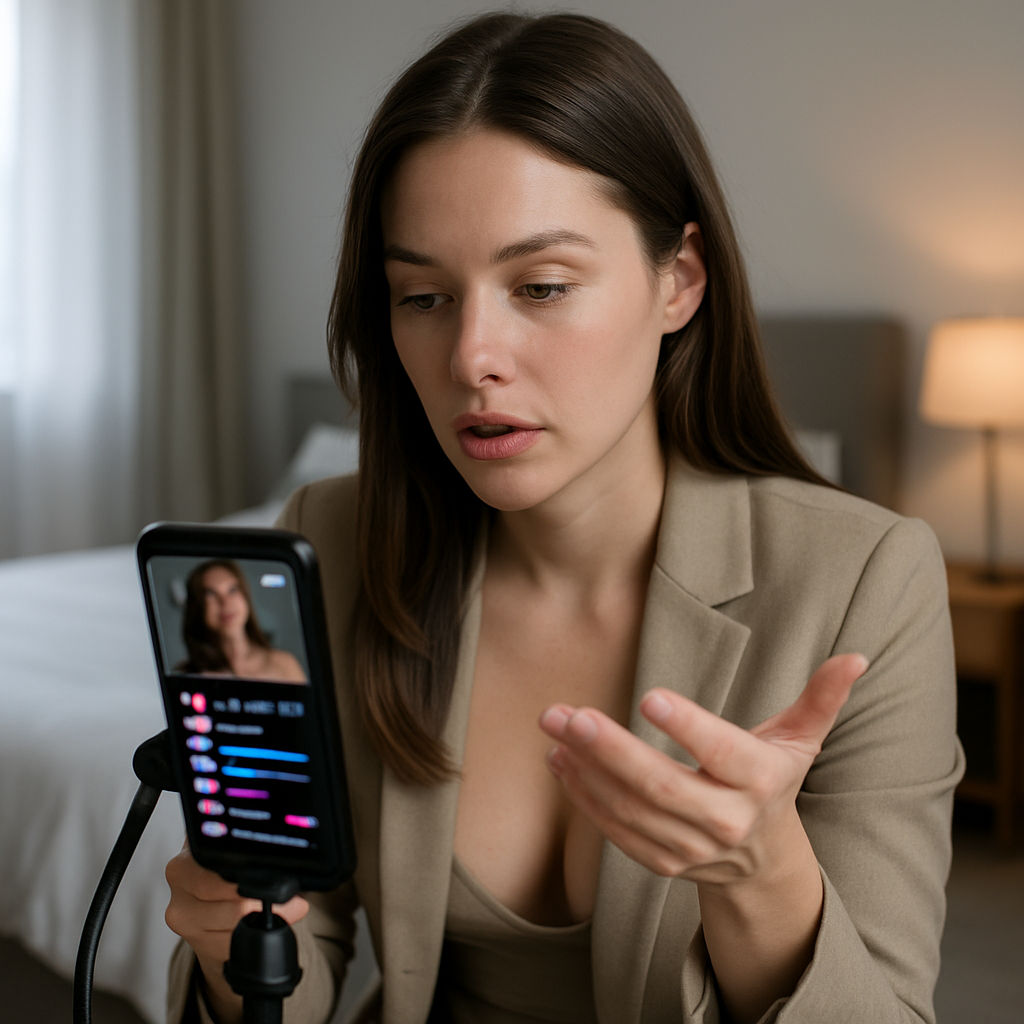
It’s much easier to maintain an image in text chats. You can edit, add, or remove things. In video chats, it’s much more complicated. You see yourself on the screen. You hear your own voice. You notice when you’re trying to “look the part.” And if your image strays too far from reality, it starts to feel off — for you and, consequently, for the person you’re talking to.
Why is this important?

Because when you’re playing a role too intensely, a genuine connection doesn’t form. You’re not there as a person, but as an image. Over time, this gets really exhausting. You start to feel like people “don’t see” you. And sometimes you yourself stop understanding where the act ends and the real you begins.
Without a balance between these roles, it’s easy to lose your bearings. You start to believe that your “real self” isn’t good enough for meaningful communication.
Main Risks and Dangers

- The first is losing yourself. The longer you maintain a certain artificial image, the harder it is to return to reality later.
- Second is anxiety — the fear that you’re about to be “exposed.”
- Third is superficial connections. When you don’t show your true self, you can’t form deep connections.
How to Stay Authentic in Your Online Presence
- Start by being honest with yourself. Ask yourself: “How close is what I’m showing to who I really am?” Not to change everything right away, but simply to notice at least some difference.
- It’s much easier to do this in video chats. You see yourself and can notice the moments when you “slip into a role.”
- Notice when you “slip into a role.” This usually happens when you want to impress someone or are afraid of appearing weak to the person you’re talking to.
- Allow yourself a few small “slips.” Sometimes it’s okay to say, “I’m a little tired right now” or “I don’t know how to respond.” This significantly reduces the pressure to maintain your image.
- In video chats, pay attention to your body language. When you tense up to “look the part,” it’s a sign that your persona has taken over.
- After the conversation, ask yourself, “How much of myself was I?” Not to judge, but simply to understand.
- You don’t have to be completely open right away. It’s enough to gradually lower your guard. One honest moment per conversation is already a very significant step.
- If you feel like your persona is too strong, you can say directly, “You know, sometimes I try to seem more confident than I really am.” That’s already authenticity.
- Come back to reality after each session. Take off the “mask” — at least for yourself. This helps you avoid getting lost in the persona.
- Check your balance during regular interactions. If you notice that you’re playing a role more and more often, it means it’s time to be yourself a little more.
Pros and Cons
Pros: When you stay authentic, the connection becomes genuine. You get less tired because you’re not wasting energy constantly maintaining a fabricated image. This is especially valuable in video chats — you look and feel much more natural.
Cons: It might be a little scary at first. You might feel a certain vulnerability. It takes time to get used to revealing a little more of yourself.
Common Mistakes
- Thinking that authenticity means “revealing everything at once.” No. It’s a gradual and often slow process.
- Completely abandoning your persona all at once. This can cause severe anxiety. It’s better to approach it gradually.
- Believing that any persona is inherently bad. Sometimes a small “role” can be quite helpful at the start. The problem arises when it becomes permanent.
- Ignoring your body’s signals. When you’re straining to live up to a persona — that’s a real red flag.
Comparing Approaches

| Aspect | Strong Virtual Image | Balance between role and reality |
|---|---|---|
| Fatigue level | High | Lower |
| Depth of connection | Low | Higher |
| Alert | Higher | Lower |
| In video chats | It's hard to keep up a facade for long | It’s easier to be yourself |
When you find that balance, communication stops being about maintaining an image and becomes simply a pleasant, relaxed conversation.
FAQ

What does authenticity mean in a virtual persona?
It’s when what you show in chat is close enough to who you really are. It doesn’t have to be “completely open,” but it shouldn’t be a thick facade either.
Why is it hard to stay authentic in chats?
Because there’s a desire to please the person you’re talking to. The persona seems perfect. But the further the persona strays from reality, the more energy it takes to maintain it.
How can you tell if you’re overdoing it?
By feeling intense tension. By fearing you’ll make a mistake. By feeling drained rather than lighthearted after the conversation.
Do you have to completely give up your online persona?
No. It’s enough to gradually let it go. Allowing yourself to be just a little more authentic is already a big step.
How does video chat help you stay authentic?
You see yourself. It’s harder to maintain a strong persona for a long time when you see your own real reactions.
What should you do if you’re afraid to show a more authentic side of yourself?
Start small. One honest moment per conversation. Over time, it’ll become easier to open up.
Does a loss of authenticity affect the quality of communication?
Yes. When you’re interacting with a persona, a genuine connection simply doesn’t form. The other person senses insincerity, even if they can’t explain why.
I’d like to summarize what’s been said. Maintaining authenticity in a virtual persona isn’t about completely abandoning your role, but about knowing how to return to your true self. Allow yourself to be a little more genuine, notice the moments when you’re putting on a front, and gradually let your guard down. In video chats like VibraGame, this is much easier to do — you can always see yourself. The main thing is to remember that a genuine connection is only possible when you’re being true to yourself, rather than trying to live up to an idealized, fabricated image.