
One model says “hello” — and her voice is so soft, warm, and slightly husky that it gives you goosebumps. Another says the same words — and nothing really stands out. The difference isn’t in their appearance. It’s all about vocal communication. Voice intonation and a pleasant tone are more powerful than any image: they convey emotions, set the mood, and bring the interaction to life. In erotic video chats, the viewer doesn’t just watch — they listen. A voice can turn you on, calm you down, arouse you, or turn you off.
It’s easy to see this from personal experience. Sometimes a model is just talking, and you can’t tear yourself away. Sometimes everything looks great, but the voice is flat — and your interest fades within a couple of minutes. The emotional tone conveyed through her voice is what sets apart a model you want to return to from one who just flashed by in your feed.
Why This Matters
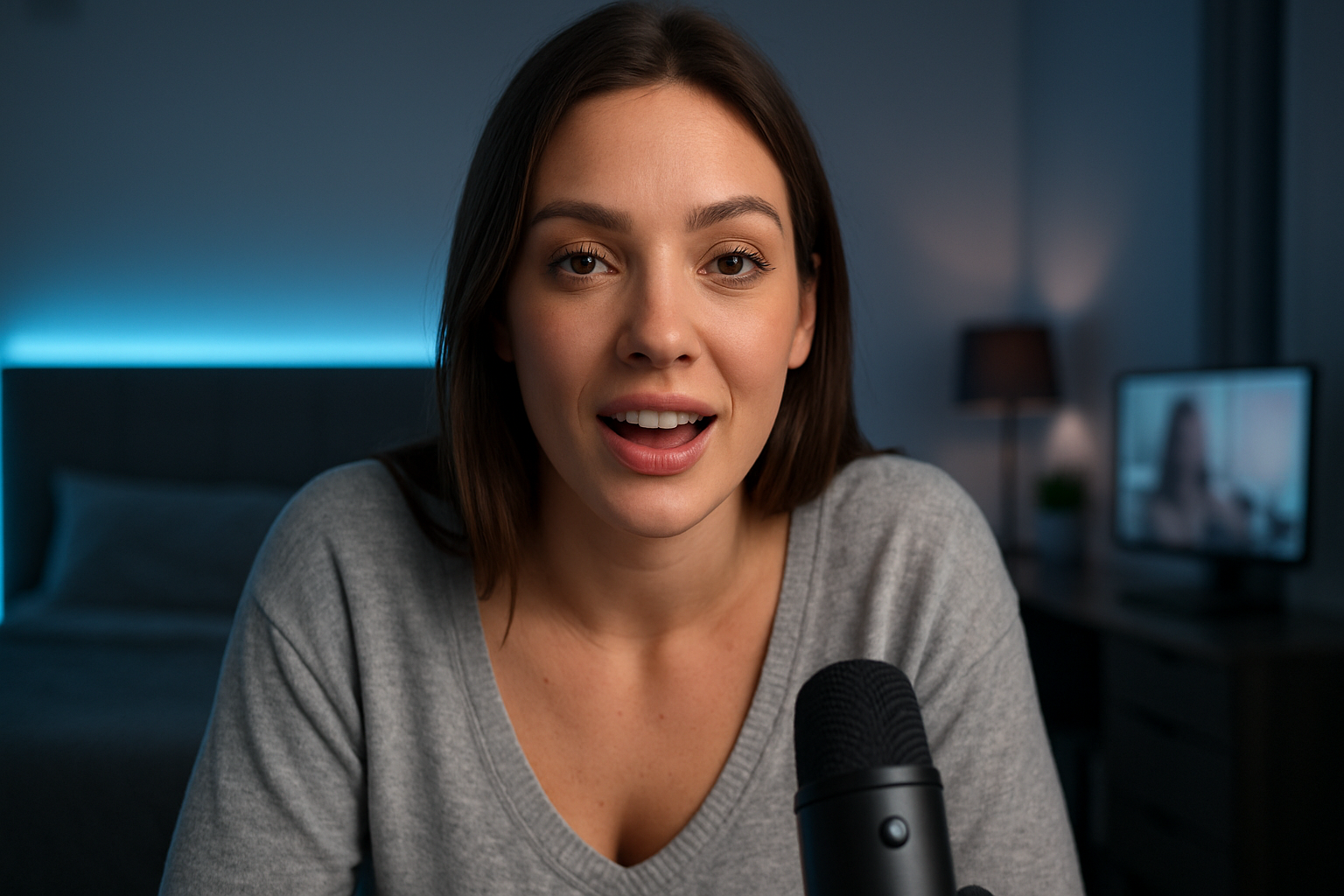
In video chats, the visuals are only half the story. The voice is the other half — and often the more powerful one. The right vocal intonation conveys mood, builds trust, and heightens the tension. A pleasant tone of voice makes a model memorable. Without it, even a very beautiful girl remains “just one of many” — viewers want to feel they’re connecting with a real person, not just watching a show.
Many models don’t think about their voice at all when they start out: they believe that appearance and movements are what matter most. And then they wonder why their friend with an average appearance earns more. The answer is simple — her voice is captivating. The emotional tone created by the right intonation works like a magnet.
Where You Can Go Wrong

The biggest loss is losing viewers due to a flat intonation. Everything might look great, but if the voice is boring, people will switch channels. A tone that’s too sharp or high is irritating — and viewers get tired of it quickly. Vocal communication requires control; otherwise, the emotional tone comes across completely differently than intended.
Monotony and speaking too quickly are a trap in their own right. The audience can’t keep up, and their interest wanes. If the voice doesn’t match the persona — a bold appearance paired with quiet, uncertain speech — dissonance arises. The audience senses insincerity. Many models complain, “I’m trying my best, but viewers aren’t sticking around.” Often, the problem lies precisely in the voice.
How to Do It Right

- Start with a warm-up. Take a few deep breaths, and relax your neck and shoulders.
- Find a tone of voice that feels natural to you. Speak slightly lower and slower than usual — this usually sounds confident and sensual.
- Work on your intonation. Vary your pitch, speed, and volume depending on what you’re saying.
- Add emotional nuance. Smile while you speak — your voice will immediately sound warmer.
- Use pauses. A short pause before an important phrase enhances the effect.
- Practice your breathing. Deep breathing gives you a rich and calm tone.
- Record and listen to yourself. Note where your voice sounds best.
- Test it on an audience. Vary your intonation and observe their reactions.
- Develop your voice. A slight hoarseness, softness, or playfulness — that’s what makes you distinctive.
- Practice regularly. Ten to fifteen minutes a day is enough to make your voice noticeably more expressive in a couple of weeks.
Advantages of this approach
- Viewers stay longer and are more likely to go private.
- You’ll be more memorable — precisely because of your voice.
- The emotional tone works in your favor even during long sessions.
- You’ll enjoy the interaction more yourself.
Cons
- It takes time to practice.
- You’ll have to record yourself and listen back — it feels awkward at first.
Common Mistakes
- Speaking monotonously, without any variation in intonation.
- Speaking too fast or too quietly.
- Not working on breathing and relaxing your throat.
- Copying someone else’s voice instead of developing your own.
- Forgetting to use pauses and vocal accents.
- Ignoring the audience’s reaction to your voice.
Comparing Approaches

| Platform | Ease of voice work | Ability to test intonation | Emotional tone | Overall comfort |
|---|---|---|---|---|
| VibraGame | Excellent | High | Strong | Maximum |
| Other Chats | Average | Limited | Below | Below |
Additional Nuances
A real-life example. A young woman spoke very quickly and in a high-pitched voice — her audience kept leaving. She began working on her tone: she lowered her voice, added pauses, and used warmer intonations. Her sessions doubled in length, and she gained a loyal audience almost immediately. The emotional tone changed everything.
Another case: a model with a vivid, passionate tone deliberately emphasized individual words with her voice. This had a stronger effect than any physical movements.
Your voice should match your image. A delicate image calls for a soft tone. A bold one — slightly lower, with a hint of hoarseness. The key is to sound natural. And vary the rhythm: sometimes slow and sensual, sometimes faster and playful. This holds the audience’s attention better than any visual technique.
FAQ

How can I tell if my voice sounds good?
Record yourself and listen. If you want to keep listening — you’re doing it right.
Can I change my tone if it’s naturally high?
Yes, you can. Regular exercises to relax and lower your pitch will show results in just 2–3 weeks.
How can I add emotional depth to my voice?
Smile when you speak, and vary your speed and pitch depending on your mood.
What should you do if your voice gets hoarse during a long session?
Take short breaks, drink warm water, and breathe more deeply. This helps maintain a pleasant tone.
Does the time of day affect your voice?
Yes, it does. In the morning, your voice is often lower and softer; in the evening, it may sound more tired — keep this in mind when planning your sessions.
Do I need to specifically train my voice every day?
Yes, for at least 10 minutes. You’ll notice results quickly.
Can you use your voice to transition to a private chat?
Yes. A low, warm tone at the right moment works better than any words.
How can you tell if a viewer is reacting specifically to your voice?
They’ll compliment your voice, stay longer, and respond more emotionally.
Voice communication is a tool that many people underestimate. The right intonation and a pleasant tone lead to longer sessions, loyal viewers, and real brand recognition. Start small: record yourself today, listen to it, and try changing your intonation in your next session. Your voice isn’t just background noise. It’s what sticks in people’s minds.